Electric car range drops in winter: normal or a battery problem?
As soon as temperatures fall, your electric car loses range and charges more slowly. In most cases, this is perfectly normal. Here is why, how to limit the loss and the signs that should alert you.
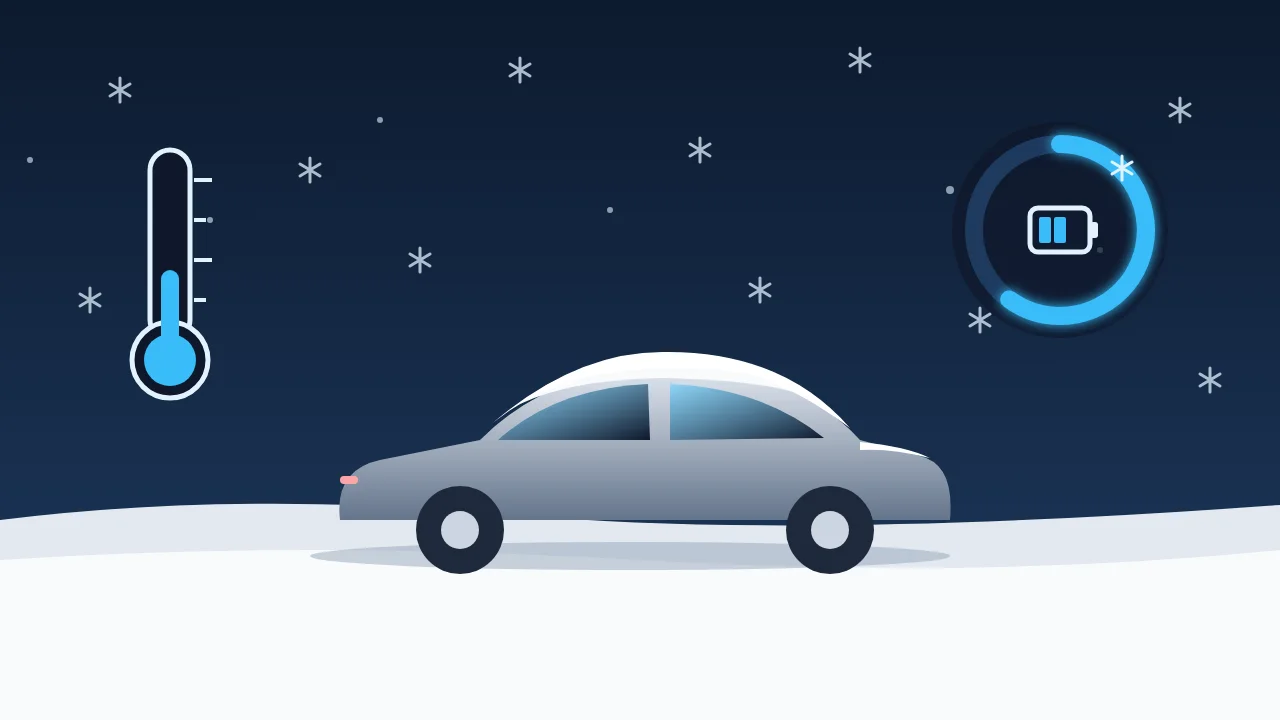
Every winter, many owners of electric cars discover with surprise that their range has fallen significantly, sometimes by a quarter or more. Is the battery failing? In the vast majority of cases, no: winter range loss is a normal and temporary phenomenon. But it is useful to understand it, to limit it and to know how to recognise a real fault.
Why range falls in the cold
The battery is less efficient
Inside a lithium-ion battery, energy is stored and released through chemical reactions. In the cold, these reactions slow down: the battery delivers its energy less efficiently, accepts less regenerative braking and charges more slowly. The car's management system also protects the cells by limiting power until they warm up.
Heating consumes energy
A combustion engine produces a lot of waste heat, which is used to heat the cabin for free. An electric motor is so efficient that it produces very little. Heating the cabin, and sometimes the battery itself, therefore draws directly on the battery. On short trips, when the cabin has to be warmed up again each time, this consumption weighs heavily.
Other factors
- Cold air is denser, which slightly increases aerodynamic drag.
- Tyre pressure drops with temperature, increasing rolling resistance.
- Winter tyres, rain and snow also increase consumption.
How much loss is normal?
Depending on the car, the temperature and the type of trips, a range loss of around 10 to 30% is common in winter, and it can be higher in severe cold or on very short journeys. Cars equipped with a heat pump generally lose less range, because this system heats the cabin using much less energy than a conventional resistive heater.
The loss is temporary: when temperatures rise again, the usual range returns.
8 tips to limit winter range loss
- Precondition while plugged in: heat the cabin and battery before leaving, using energy from the grid rather than the battery.
- Use heated seats and steering wheel: they warm you directly and consume much less than heating the air.
- Park in a garage when possible, even an unheated one.
- Check tyre pressure more often in cold weather.
- Use eco mode, which often limits heating power and acceleration.
- Combine short trips to avoid heating a cold car several times a day.
- Precondition the battery before fast charging if the car offers it, to recover a normal charging speed.
- Plan a safety margin on long trips and do not let the battery drop too low in very cold weather.
When should you be worried?
Some signs may indicate a real problem rather than a seasonal effect:
- the range remains abnormally low in mild weather;
- the charge level drops suddenly, for example from 40% to 10% in a few minutes;
- a warning message about the high-voltage battery or the charging system appears;
- the car charges much more slowly than usual even when the battery is warm.
In these cases, contact your dealer or a specialist and ask for a battery health check (State of Health). The battery is usually covered by a specific warranty, often 8 years or 160,000 km, which protects you in the event of excessive capacity loss.
For everything else, winter range loss is simply part of driving electric. With a few good habits, it remains easy to manage, even in cold regions.