Charging an electric car at home: socket, wallbox, costs and safety
Most electric car owners charge at home. Standard socket or wallbox, charging times, costs and safety rules: everything you need to know to charge safely and cheaply.
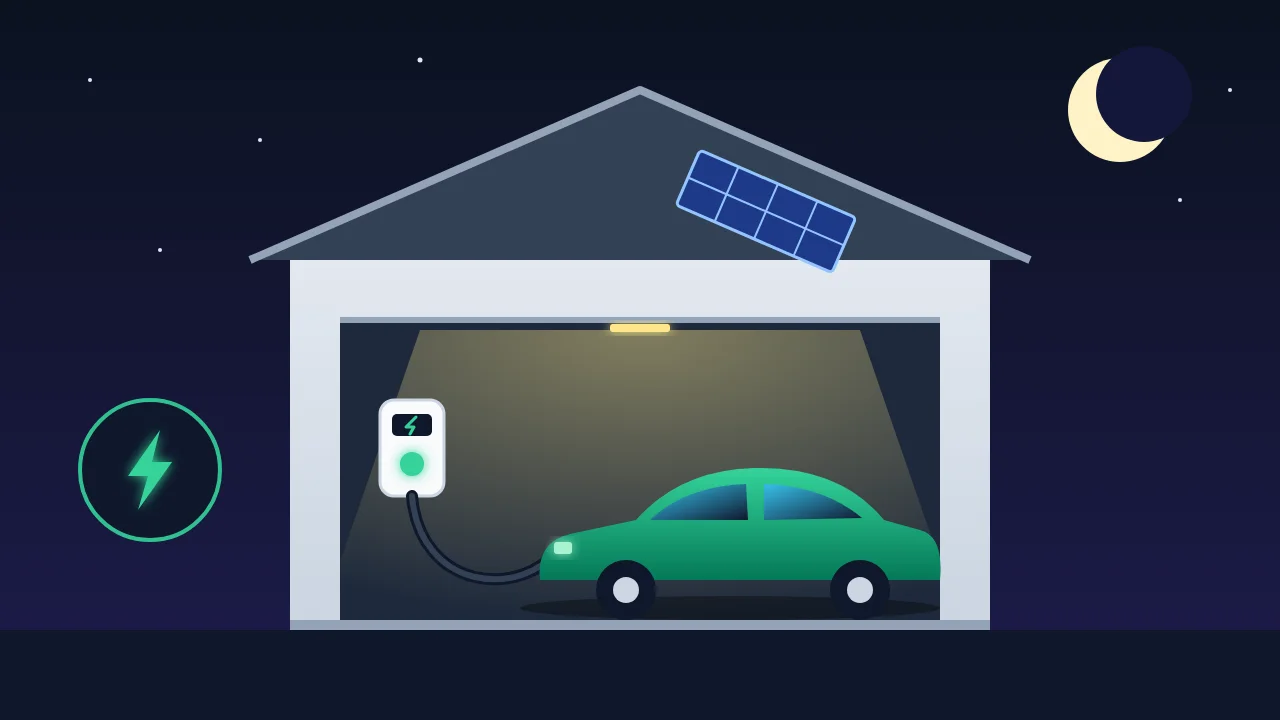
Charging at home is one of the great advantages of an electric car: you plug in in the evening and leave every morning with a "full tank", at a much lower cost than at public stations. But not all solutions are equal in terms of speed, cost and, above all, safety.
Option 1: the standard household socket
Almost every electric car can be charged from an ordinary socket using the cable supplied with the car (often called a "granny cable"). In Europe, the power is usually limited to about 2.3 kW, which adds around 10 to 15 km of range per hour of charging.
- Advantages: no installation, ideal for occasional use or a plug-in hybrid with a small battery.
- Disadvantages: very slow for a large battery, and an old or undersized circuit can overheat during long charging sessions.
If you use this solution regularly, have your installation checked by an electrician, and never use extension leads or multi-socket adapters.
Option 2: the reinforced socket
A reinforced socket, designed for long charging sessions, allows slightly higher power (around 3.7 kW depending on the model) with better safety. It is an intermediate solution, cheaper than a wallbox.
Option 3: the wallbox
A wallbox is a charging station fixed to the wall and connected to a dedicated circuit. It is the recommended solution for daily charging.
- 7.4 kW on a single-phase supply: around 40 to 50 km of range per hour.
- 11 kW or 22 kW on a three-phase supply, if your home has one.
Be careful: the actual charging power is also limited by the car's on-board charger. Many cars accept 7.4 or 11 kW in AC; installing a 22 kW wallbox is pointless if your car cannot use it.
Many wallboxes are "smart": they let you schedule charging during off-peak hours, follow your consumption in an app, adjust power to avoid overloading your home and, in some cases, use the production of your solar panels.
How long does it take?
Example for a car with a 60 kWh battery, charged from 20 to 80% (about 36 kWh):
| Solution | Power | Approximate time |
|---|---|---|
| Standard socket | 2.3 kW | About 16 hours |
| Reinforced socket | 3.7 kW | About 10 hours |
| Single-phase wallbox | 7.4 kW | About 5 hours |
| Three-phase wallbox | 11 kW | About 3.5 hours |
These times are indicative: charging losses, temperature and the car's charging curve affect the result.
How much does it cost?
The cost of a charge depends on your electricity price. Simply multiply the energy added by the price per kWh, adding around 10% for charging losses. With an off-peak tariff, charging at home is generally several times cheaper than fast charging on public networks. The installation of a wallbox, including equipment and labour, represents an investment that varies by country and by the complexity of the work; incentives exist in some countries.
Safety rules
- Have the installation carried out by a qualified electrician, with a dedicated circuit and appropriate protection, including a residual-current device suited to electric vehicle charging.
- Never use extension leads, adapters or multi-socket strips.
- Regularly check the condition of the cable and connectors, and replace any damaged equipment.
- Keep the cable away from areas where it could be crushed or tripped over.
- If the socket, plug or cable becomes hot to the touch, stop charging and have the installation checked.
And if you live in an apartment?
Charging in a shared car park is possible in many countries, but it usually requires the agreement of the building's management or co-owners, and sometimes a collective installation. Rules vary from country to country: find out about your local "right to plug" regulations before buying your car.
With the right installation, home charging becomes a simple routine: plug in when you arrive, unplug when you leave, and rarely think about public stations again for your daily trips.