V2L, V2H, V2G: when your electric car becomes a power bank
More and more electric cars can send electricity back out of their battery. Powering a laptop, your home or even the grid: here is what bidirectional charging can and cannot do.
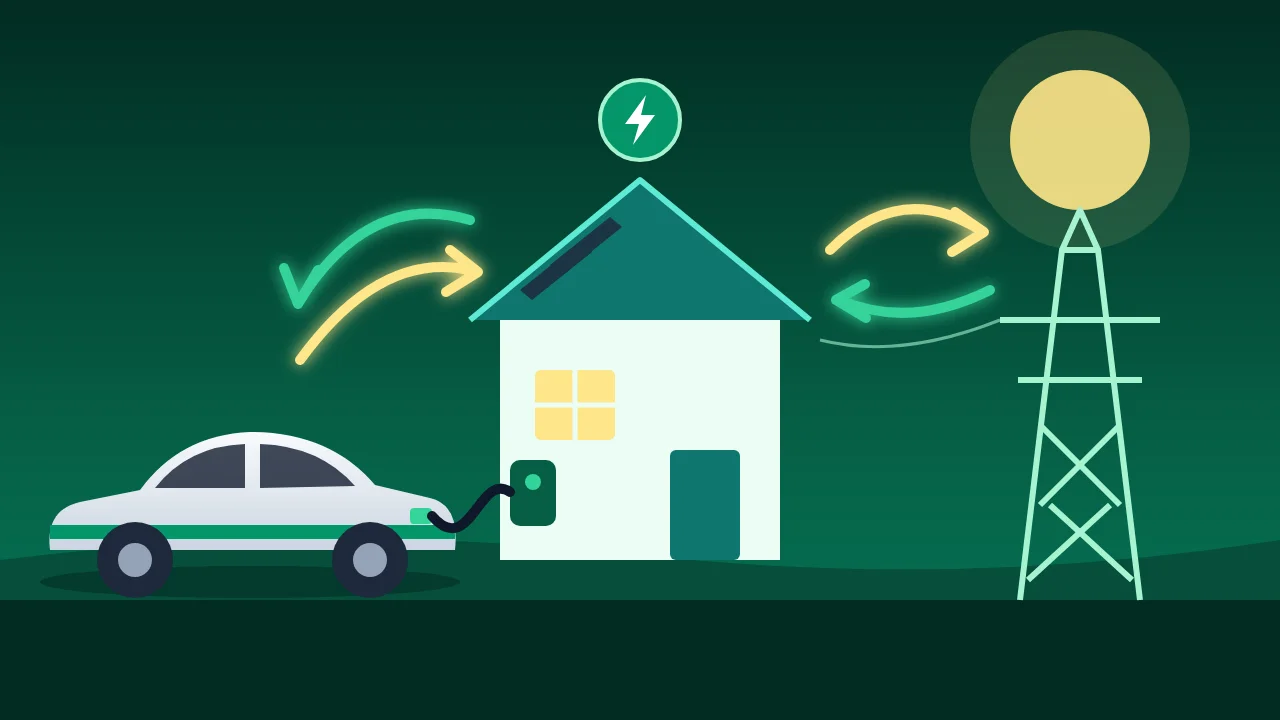
An electric car carries a large battery, often between 40 and 100 kWh. That is several days of electricity consumption for an average home. For a long time, this energy could only go one way: from the grid into the car. With bidirectional charging, it can also flow back out.
Three levels of bidirectional charging
V2L: Vehicle-to-Load
V2L is the simplest form. The car provides a standard household socket, either inside the cabin or through an adapter plugged into the charging port. You can power a laptop, an electric grill, tools on a building site or camping equipment. Many recent models offer V2L with a power of around 2 to 3.6 kW, enough for most appliances.
V2H: Vehicle-to-Home
With V2H, the car supplies electricity to your house. It can act as a back-up power source during a power cut, or store cheap off-peak or solar electricity and release it in the evening. V2H requires a compatible bidirectional wallbox and an electrical installation that safely isolates the home from the grid when needed. It must be installed by a qualified electrician.
V2G: Vehicle-to-Grid
V2G goes one step further: thousands of parked cars could send energy back to the grid at peak times, helping to balance supply and demand. In return, owners could be paid by their energy supplier. V2G depends not only on the car and the charger, but also on local regulations and agreements with grid operators, which is why it is still mostly at the pilot stage in many countries.
What do you need?
- A compatible car: check the manufacturer's specifications. V2L is the most common feature; V2H and V2G are supported by fewer models and sometimes only in certain markets.
- The right connection standard: bidirectional charging has existed for years with the CHAdeMO connector, and is now being rolled out on CCS-equipped cars through newer communication protocols.
- A bidirectional charger for V2H and V2G. These units are more expensive than a standard wallbox.
- An agreement with your energy supplier if you want to sell electricity back to the grid.
Does it wear out the battery?
Any additional charge and discharge cycle contributes slightly to battery ageing. However, the energy typically used for a home in one evening represents only a fraction of a full cycle, and modern battery management systems limit the depth of discharge. Most systems also let you set a minimum charge level so that the car always keeps enough range for your next trip. Check your warranty terms: some manufacturers specify conditions for bidirectional use.
Is it worth it?
V2L is a practical bonus that many owners use regularly, from picnics to work sites. V2H can make sense if you have solar panels, a time-of-use electricity tariff or frequent power cuts, but the cost of the equipment must be weighed against the savings. V2G could become attractive once remuneration schemes are widely available.
If you are choosing a new electric car, it is worth checking whether it supports bidirectional charging: even if you do not use it immediately, it can add flexibility and value over the years.